
Introduction
For commercial operators, remote communities, and critical facilities, the cost of grid dependency keeps climbing. In the U.S., commercial electricity prices reached 12.75 ¢/kWh in 2024, while power interruptions cost commercial customers approximately $1,067 per outage and industrial customers $4,227 per event. For operations that cannot afford downtime—remote mining sites, Arctic communities, island resorts, military bases—these dual pressures have made grid dependency a financial and operational liability.
The stakes in choosing an off-grid power setup are high. The wrong system means ongoing fuel costs that compound annually, undersized capacity that forces load shedding, or stranded assets that cannot scale.
Get it right, and you lock in decades of energy independence, predictable costs, and operational resilience. Intelligent system design—one that matches generation to load, integrates renewable resources without curtailment, and adapts as your needs evolve—is what separates a sound investment from an expensive mistake.
TL;DR
- Off-grid power systems generate and store electricity independently using solar, wind, hydro, or generators
- Correct sizing, site-matched renewable resources, and scalable design determine long-term value far more than upfront cost
- Levelized Cost of Energy (LCOE) reveals long-term value; intelligent energy management consistently delivers the lowest LCOE
- Large-scale and remote off-grid systems require an Energy Management Control System (EMCS) to optimize components and maintain grid stability
- Select systems based on load profile accuracy, storage chemistry, backup redundancy logic, and control system intelligence
What Is an Off-Grid Power Setup?
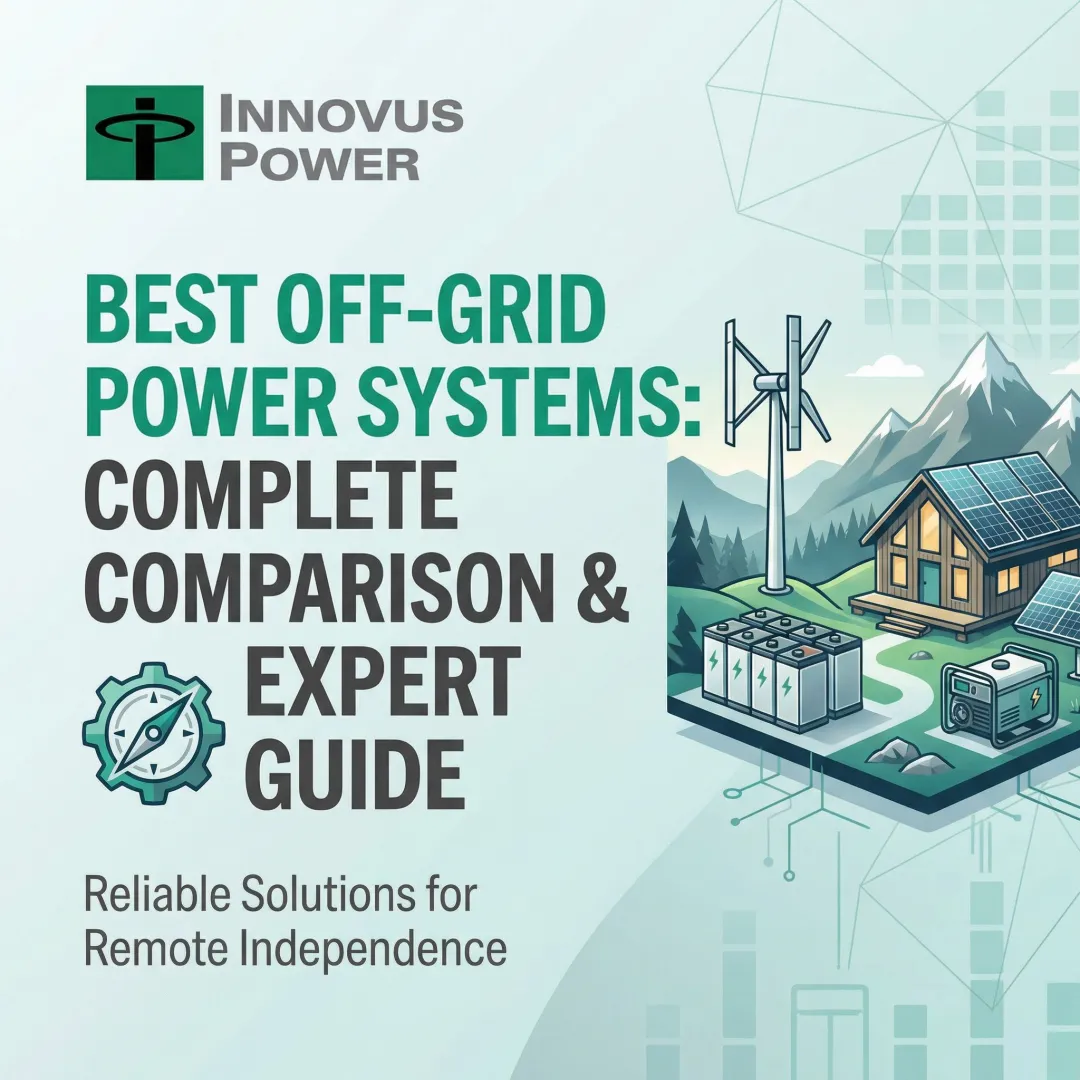
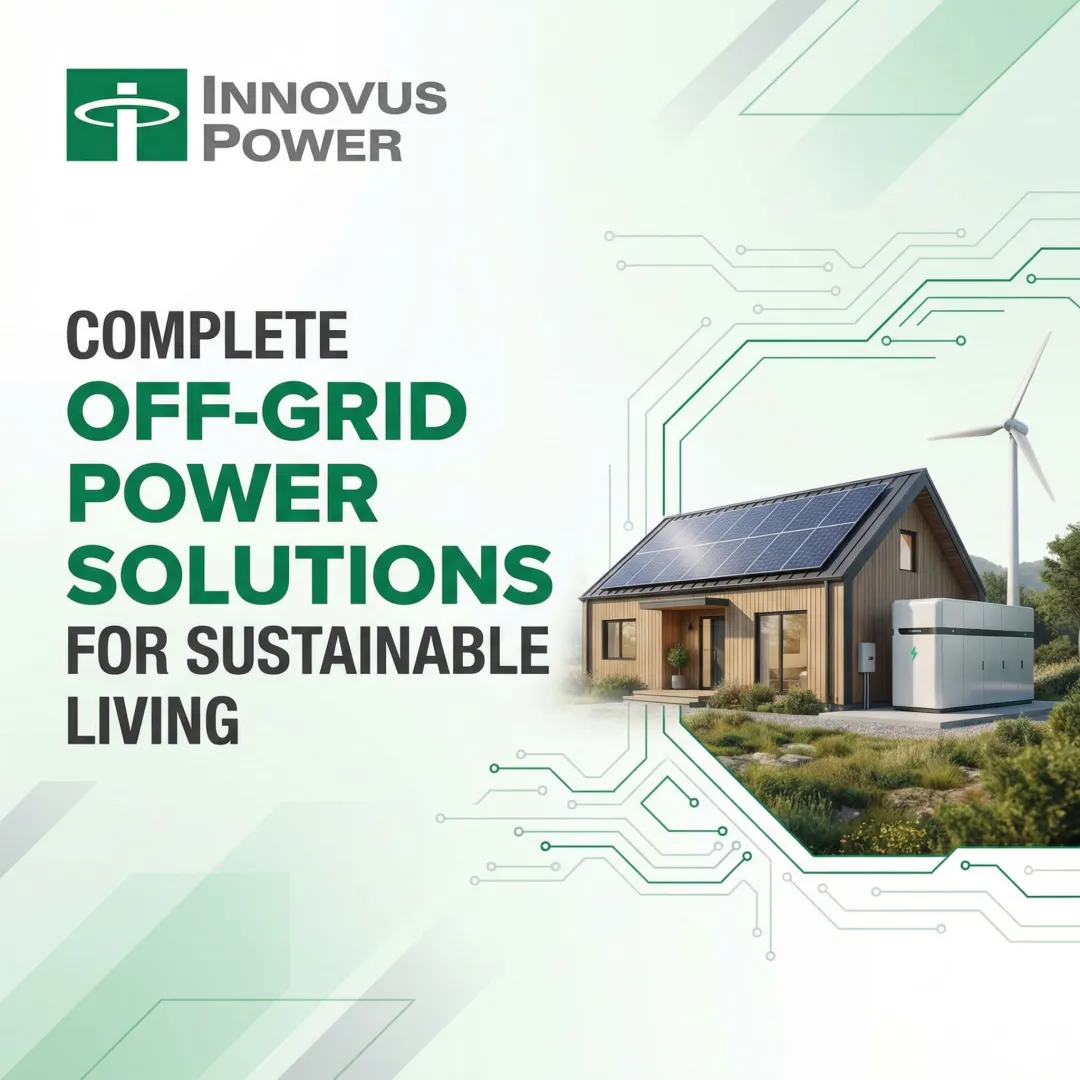
An off-grid power setup generates, stores, and distributes electricity entirely independent of a centralized utility grid. These systems range from simple solar-plus-battery cabin installations to sophisticated commercial microgrids serving remote mining operations, island communities, or military installations requiring megawatts of continuous power.
The spectrum of off-grid configurations includes single-source systems (standalone solar or diesel), hybrid systems combining multiple generation sources, and intelligent microgrids with automated energy management. This guide focuses on reliable, long-term solutions for commercial, industrial, and community applications.
Core Components of an Off-Grid Power System
Power Generation Sources form the primary input layer:
- Solar photovoltaic arrays
- Wind turbines
- Micro-hydro systems
- Fossil-fueled or hydrogen generators
Resilient systems typically combine two or more sources to compensate for variability. A solar-only system in northern latitudes faces winter shortfalls; a wind-only system struggles during calm periods. Hybrid configurations deliver consistent output across seasons and weather patterns.
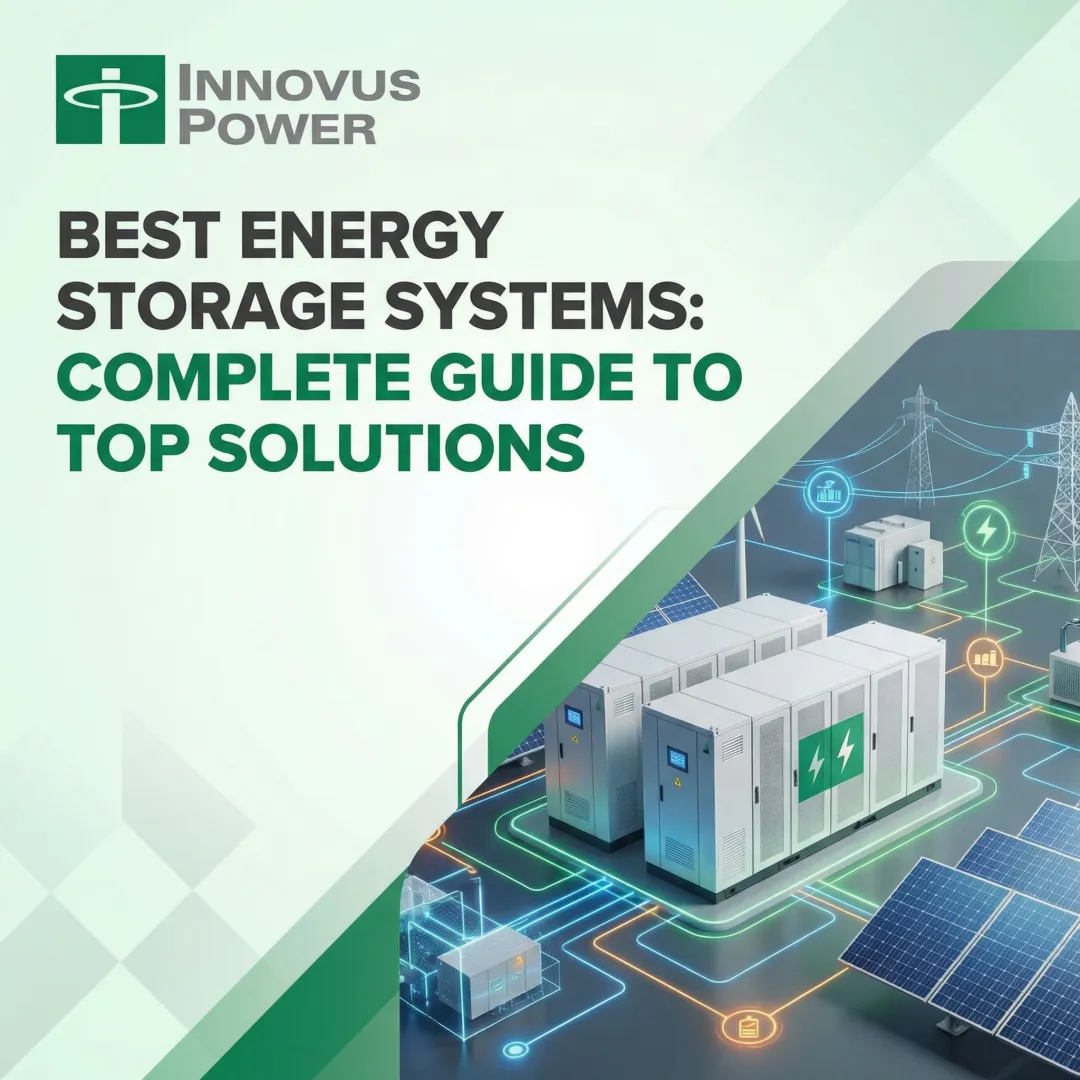
Energy Storage captures surplus generation for use when primary sources are unavailable. Modern systems mainly use lithium-based chemistries — particularly LiFePO4. Compared to lead-acid, the difference is significant:
| Metric | LiFePO4 | Lead-Acid |
|---|---|---|
| Round-trip efficiency | ~95% | 60–70% |
| Cycle life | 2,000–5,000+ cycles | <1,000 cycles |
Storage sizing must account for days of autonomy, depth of discharge limits, and expected cycle life across the system's 20-25 year horizon.
Power Conversion & Control Hardware includes inverters, charge controllers, and switchgear that regulate voltage, convert DC to AC, and protect equipment. Quality and compatibility at this layer directly affect power quality and component longevity—cheap inverters produce harmonic distortion that shortens equipment life.
Benefits of Going Off-Grid
Three practical advantages drive the move to off-grid:
- Cost predictability: U.S. commercial electricity prices have tracked or exceeded inflation over the past decade, cutting into margins for energy-intensive operations. Off-grid systems convert a variable, rising utility bill into a fixed capital expense with predictable maintenance costs.
- Operational continuity: The average U.S. SAIDI stands at approximately 106 minutes of outage per year — but remote and rural sites experience far worse. For mining operations, island communities, and critical facilities, off-grid isn't an option; it's the baseline.
- Emissions reduction: Diesel generators emit approximately 1.65 kg CO2eq per kWh. Hybrid microgrids can cut diesel consumption by 10-23% depending on configuration, and systems achieving 90%+ renewable penetration eliminate nearly all emissions from baseload generation.

Key Factors to Consider When Choosing Your Off-Grid Power Setup
Choosing the right off-grid power setup requires matching technical specifications to operational realities. The factors below connect system design decisions to measurable outcomes: uptime, fuel spend, emissions, and total cost of ownership.
Energy Load Profile & Scalability Requirements
An accurate load analysis is the starting point — everything else builds from it. You must document:
- Peak demand (kW)
- Average daily consumption (kWh)
- Seasonal variation
- Anticipated growth over 10-20 years
Undersizing leads to load shedding or generator overuse; oversizing wastes capital. A facility that peaks at 500kW for two hours daily but averages 200kW needs different architecture than one with constant 400kW baseload.
Scalability must be built into the initial design. Modular architecture allows battery bank expansion, additional generation sources, and upgraded inverter capacity without costly redesigns. A 500kW system designed for 1MW expansion costs less than rebuilding a fixed 500kW system when growth arrives.
Renewable Resource Availability at the Site
System viability depends entirely on site-specific resources. Solar irradiance maps from the Global Solar Atlas and wind speed data at hub height must be assessed before committing to a generation mix. A system optimized for Nevada desert conditions (6-7 kWh/m²/day solar irradiance) will fail in a northern boreal community (2-3 kWh/m²/day in winter).
Hybrid multi-source configurations substantially cut intermittency and allow higher renewable penetration. Sites relying on a single renewable source face larger battery banks or more backup generation to compensate for weather-driven shortfalls.
Energy Storage: Sizing, Chemistry & Cycle Life
Storage sizing parameters include:
- Days of autonomy needed (typically 1-3 days for commercial systems)
- Maximum depth of discharge (80-100% for LFP, 50% for lead-acid)
- Round-trip efficiency of the chosen chemistry
- Projected daily energy throughput
Battery chemistry selection affects energy density, cycle life, maintenance burden, and temperature performance. Lithium Iron Phosphate (LFP) batteries offer superior round-trip efficiency (~95%) compared to lead-acid (60-70%), with cycle life of 2,000-5,000+ versus sub-1,000 for lead-acid. While LFP costs more upfront, lower replacement frequency and higher efficiency deliver better lifetime economics.
Backup & Redundancy Strategy
A backup generation source (typically diesel, natural gas, or increasingly hydrogen) is critical even in high-renewable-penetration systems. Prolonged low-generation periods such as cloudy weeks or windless stretches require dispatchable fallback to protect loads without draining storage to damaging depths.
Redundancy architecture determines fuel consumption and maintenance frequency. Rules governing when backup activates, how long it runs, and how it interacts with storage make the difference between efficient and wasteful operation. NREL research shows hybrid microgrids can often remove 2-3 backup generators from a facility's design while maintaining or improving reliability.
Levelized Cost of Energy (LCOE)
LCOE is the total lifecycle cost (capital, installation, fuel, maintenance, replacement) divided by total energy produced over the system's lifetime, expressed in dollars per kWh. This is the correct metric for comparing off-grid options because upfront cost alone misleads when fuel, maintenance, and component replacement cycles differ significantly.
Current LCOE benchmarks illustrate the cost gap clearly:
| System Type | Typical LCOE | Notes |
|---|---|---|
| Solar-hybrid mini-grid | ~$0.38/kWh today | Pathway to ~$0.20/kWh by 2030 |
| Diesel-only (remote) | $0.60/kWh or higher | 55-126% more expensive than optimized hybrids |
| High-renewable hybrid | Lowest over 20-25 years | Higher upfront capital; fuel savings compound over time |

Source: World Bank solar-hybrid mini-grid analysis
Intelligent Energy Management & Control
In any multi-source off-grid system, an Energy Management Control System (EMCS) coordinates generation sources, storage, and loads in real time. The EMCS maximizes renewable utilization, protects battery health, minimizes generator runtime, and maintains stable power quality.
Advanced EMCS platforms enable 24/7 remote monitoring, predictive dispatch logic, and the ability to adapt to changing load patterns or new generation sources. For commercial, industrial, and remote community applications where operational staff may be limited and downtime is costly, sophisticated energy management is what separates a reliable system from a reactive one.
Power Quality Requirements
Power quality — voltage stability, frequency consistency, and harmonic distortion — matters critically for facilities operating sensitive electronic equipment, medical devices, or precision industrial machinery. Poor power quality shortens equipment lifespan and causes operational failures.
Two IEEE standards set the baseline for off-grid power quality compliance:
- IEEE 519-2014: Sets Total Harmonic Distortion (THD) limits at 8.0% for systems ≤1.0 kV and 5.0% for 1-69 kV systems
- IEEE 1547-2018: Specifies voltage regulation, frequency response, and power quality requirements critical for islanded operation
Inverter quality, proper system grounding, and EMCS-governed voltage regulation are the primary levers for maintaining utility-grade power quality off-grid.
How Innovus Power Can Help
Innovus Power brings over 30 years of experience developing intelligent microgrid solutions for remote communities, commercial operations, and industrial sites moving away from unreliable, high-cost power. The company combines deep expertise in solar, wind, hydro, storage, and dispatchable generation — selecting the best-fit technology for each project, with no supplier bias.
Central to every deployment is the proprietary GridGenius™ Microgrid Platform, which integrates the GridGenius EMCS™ (Energy Management Control System) with proprietary modeling and simulation tools. Together, these deliver up to 90–100% renewable energy penetration without curtailment, and up to 80% reductions in fuel consumption and power costs.
What sets Innovus Power apart:
- Vendor-agnostic system design with no technology or supplier bias
- Variable speed generator technology delivering up to 50% superior efficiency at all loads
- 24/7 remote monitoring and management worldwide
- Proven deployments across remote Arctic locations, Caribbean islands, mining, oil and gas, military, and commercial facilities
- Modular architecture that scales and adapts as energy needs change over time

Conclusion
Panel count and battery capacity are the wrong metrics for evaluating an off-grid power setup. What determines long-term performance is how well a system is designed: load analysis done rigorously, renewable resources matched to site conditions, redundancy built in from the start, and control logic that optimizes every component in real time.
A well-designed system doesn't stay static. For remote sites, commercial operations, and critical infrastructure, system performance should be reviewed as load profiles shift, new technologies become viable, and renewable penetration targets change. The systems that deliver the lowest long-term cost of energy share a few consistent traits:
- Designed around real load data, not estimated averages
- Scalable architecture that accepts new generation or storage capacity
- Intelligent control software that adapts dispatch logic automatically
- Vendor-agnostic component selection matched to site conditions
Investing in these fundamentals from the outset separates a power setup that degrades over time from one that adapts and improves as operational demands evolve.
Frequently Asked Questions
How to get electricity in a remote area?
Remote electricity is most reliably delivered through a standalone microgrid or off-grid hybrid system combining solar, wind, or hydro generation with battery storage and a backup generator. The right configuration depends on the site's renewable resource profile, load requirements, and need for uninterrupted supply.
What is the difference between an off-grid system and a microgrid?
An off-grid system simply operates without utility grid connection, while a microgrid is a more sophisticated architecture integrating multiple generation sources, storage, and intelligent control. A microgrid can operate off-grid or in parallel with the grid. Its defining feature is coordinated, automated energy management.
How much do you get for selling back to the grid?
Purely off-grid systems cannot sell back to the grid — sell-back rates (net metering) only apply to grid-tied or hybrid grid-connected systems. Applicable rates vary by utility and jurisdiction, so checking with your local utility is the right starting point.
Why is my electric bill so high if I have solar panels?
High bills despite solar typically point to system undersizing relative to actual load, poor system design, inadequate storage causing reliance on grid power during evenings or low-production periods, or degraded panel output. A proper load analysis and system audit usually identifies the root cause.
Can an off-grid power system support a full commercial or industrial facility?
Yes. Commercial and industrial off-grid power is well-established, particularly for remote operations in mining, oil and gas, agriculture, resorts, and military applications. The key is correct system sizing, multi-source generation, adequate storage, and an intelligent EMCS to manage complexity reliably.
What does an energy management control system do in an off-grid setup?
An EMCS continuously monitors all generation sources, storage state, and load demand. It dispatches power in the optimal sequence to maximize renewable utilization, protect battery health, minimize generator runtime, and maintain stable voltage and frequency — all without constant manual operator intervention.